
Understanding BIM Services
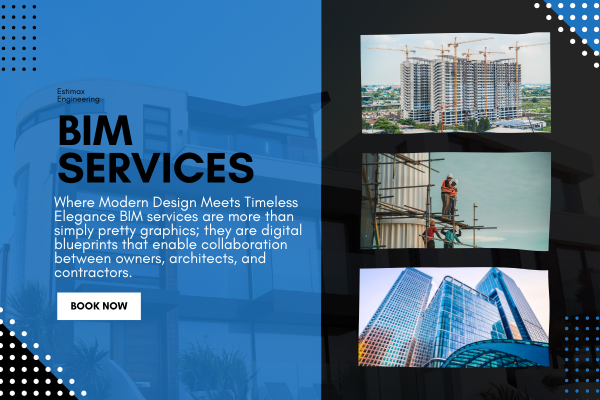
BIM services revolutionize how we design and construct buildings. They use digital models to represent structures accurately. This method boosts collaboration across the project lifecycle, ensuring efficiency.
Building Information Modeling, or BIM, is the core of these services. It provides a shared digital resource for project details. This supports informed decisions from design to completion.
BIM services help architects and engineers avoid costly errors. They simulate real-world scenarios before construction, reducing waste and enhancing project delivery.
Exploring MEP BIM Services Benefits
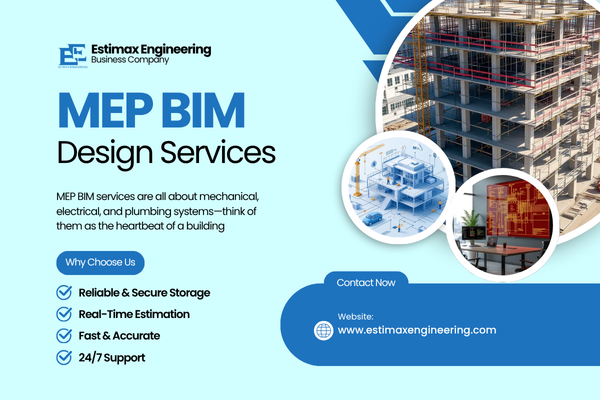
MEP BIM services focus on mechanical, electrical, and plumbing systems. They create precise models for these components, ensuring seamless integration within the building design.These services enable early clash detection through 3D visualization.
This minimizes rework, saves time, and enhances coordination among MEP disciplines.
Energy efficiency is a major benefit. MEP BIM services optimize HVAC and lighting, aligning with green building standards for sustainable construction.
Diving into Structural BIM Services
Structural BIM services model a building’s framework, detailing beams, columns, and foundations. This ensures structural integrity and safety across diverse projects.These services provide accurate load calculations and material estimates.
Engineers test designs under various conditions, reducing risks and improving reliability.
Integration with architectural models streamlines collaboration. Structural BIM services create a unified planning approach, enhancing project outcomes.
The Role of BIM Architectural Services
BIM architectural services elevate design visualization with detailed 3D models. They capture both aesthetic and functional elements, helping architects refine their vision.
These services improve client presentations with immersive models. Stakeholders can offer early feedback, leading to better project outcomes and fewer revisions.Compliance with building codes is streamlined. BIM architectural services ensure designs meet regulations, speeding up approvals and reducing delays.
Understanding 5D BIM Services
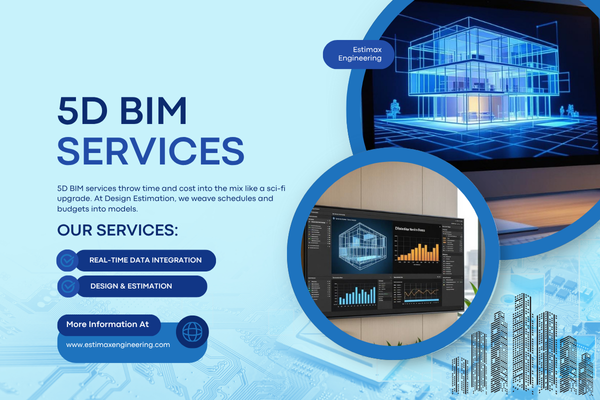
5D BIM services integrate cost and time into models, linking design to budgets and schedules. This offers a comprehensive view of project progress.
They enhance cost estimation accuracy, allowing real-time expense tracking. This prevents budget overruns andkeeps projects financially on track.Time management is improved by simulating construction sequences. 5D BIM services identify potential delays early, ensuring timely completion.
BIM Coordination: Ensuring Seamless Integration
BIM coordination unifies disciplines like MEP and structural teams. It manages data exchange, eliminating silos and fostering effective teamwork.Standardized protocols ensure model accuracy and timely updates.
Regular coordination meetings resolve issues quickly, maintaining project momentum and quality.
Cloud-based tools enable real-time global collaboration. This supports complex projects like high-rise buildings or large-scale infrastructure developments.
Tools We Use in BIM Services
BIM services rely on advanced software. Autodesk Revit leads in creating detailed models for MEP, structural, and architectural workflows.
Navisworks excels in clash detection and coordination, integrating models for comprehensive analysis.
Tekla Structures supports precise structural BIM services for steel and concrete.
BIM 360 enables cloud collaboration, streamlining data sharing. These tools drive efficiency and accuracy in BIM services implementation.
Key Applications of BIM Services
BIM services span residential, commercial, and healthcare projects, designing efficient hospitals and robust infrastructure like bridges and roads.
Retrofitting leverages BIM services to assess structures for upgrades, extending building life economically. Education on BIM is growing, with universities offering specialized courses.
Government mandates for digital submissions push industry modernization. BIM services ensure compliance and streamline approval processes effectively.
Challenges in Implementing BIM Services
Adopting BIM services involves challenges like high initial costs for software and training. Small firms may need strategic budget planning to adopt them.Data security is critical, as models contain sensitive information. Robust cybersecurity measures protect against potential breaches and data loss.
Software interoperability issues persist, but standard formats like IFC help. Overcoming resistance to change is key to demonstrating BIM services’ value.
Future Trends in BIM Services
BIM services will evolve with AI, automating repetitive tasks to free teams for creative solutions. Augmented reality will overlay models on sites for better visualization.
Sustainability will drive BIM services, prioritizing green practices. Blockchain may secure data, ensuring tamper-proof records and stakeholder trust.These advancements will enhance efficiency and innovation. BIM services are set to shape the future of construction globally.
| Aspect | Traditional Methods | BIM Services |
|---|---|---|
| Collaboration | Siloed teams | Real-time integration |
| Cost Efficiency | Frequent rework | Early issue detection |
| Visualization | 2D drawings | 3D immersive models |
| Sustainability | Limited analysis | Advanced green simulations |
| Project Timeline | Prone to delays | Streamlined scheduling |
This table compares traditional methods to BIM services, highlighting their advantages for modern projects.
FAQs of BIM Services
BIM services use digital models for building design and management. They enhance accuracy, collaboration, and efficiency in construction projects.
MEP BIM services model mechanical, electrical, and plumbing systems. They ensure clash-free integration and promote energy efficiency.
Structural BIM services model building frameworks, ensuring safety and integration with other disciplines for reliable outcomes.
BIM architectural services create 3D designs, improving visualization and ensuring compliance with building codes for faster approvals.
5D BIM services link models to cost and time data, improving budgeting and scheduling accuracy for projects.
Conclusion
BIM services are reshaping construction with precision and innovation. MEP BIM services, structural BIM services, BIM architectural services, and 5D BIM services drive efficiency. Using tools like Revit and Navisworks, they ensure seamless collaboration an